


Security cameras are one of the most important tools in any physical security program. They help organizations monitor activity, investigate incidents, and document what happened when something goes wrong.
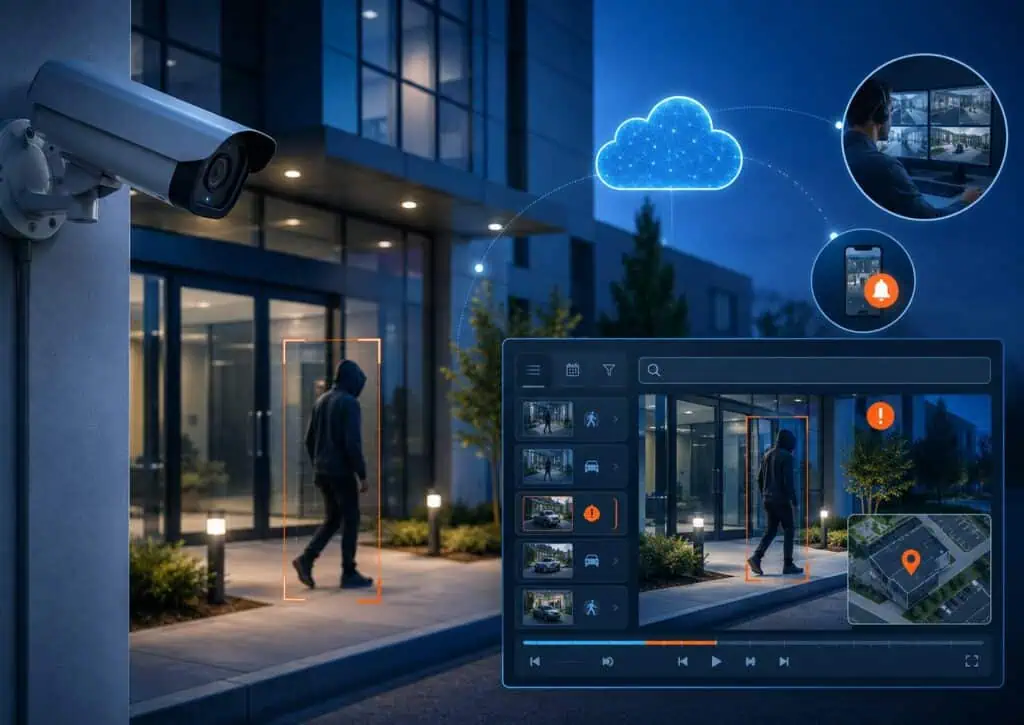
But cameras alone do not solve security problems.
A camera can record an event, but it does not automatically prevent that event from happening. It does not always alert the right person at the right time. It does not make hours of footage easy to search. And it does not guarantee that security teams can quickly understand what happened, respond appropriately, or share evidence when needed.
That is why more organizations are moving beyond traditional video surveillance and adopting smarter, cloud-based video systems that make security footage easier to use, search, and act on.
The Problem with Traditional Security Cameras
For years, many businesses viewed video surveillance as a passive tool. Cameras were installed throughout a property, connected to a recorder, and used mainly after an incident occurred.
That approach can still provide value, but it has major limitations.
If a break-in, theft, safety issue, or unauthorized access event happens, someone still has to review the footage. In many systems, that means manually searching through timelines, switching between cameras, downloading clips, and trying to piece together what happened.
This process can be slow, frustrating, and inconsistent. In some cases, the footage exists, but the team cannot find the right video quickly enough for it to be useful.
The result is a system that records more information than the organization can easily use.
More Cameras Can Create More Complexity
Adding more cameras may seem like the obvious answer to a security gap. But more cameras also create more footage, more alerts, more users, more devices to manage, and more data to review.
Without the right video management tools, a larger camera system can become harder to operate.
Security teams may struggle with:
- Slow video searches
- Too many false or low-priority alerts
- Limited remote access
- Inconsistent user permissions
- Difficult video exports
- Disconnected systems across multiple locations
- Missed events due to limited staff or manual monitoring
When video is difficult to manage, teams may only use a fraction of the system’s full value.
Security Teams Need Actionable Video
Modern security is not just about recording what happened. It is about helping teams understand what matters and take action faster.
Actionable video gives security teams the tools to detect activity, verify events, search footage quickly, and respond with better information.
Instead of relying only on passive recording, organizations can use intelligent video surveillance to identify important events and reduce the time it takes to investigate them.
This can include capabilities such as:
- AI-powered video analytics
- Real-time event alerts
- Remote access to live and recorded video
- Natural language video search
- Appearance-based search
- Area-based search
- Cloud video storage
- Easy clip sharing and evidence export
- Centralized management across locations
These tools help transform video from a basic recording system into a more useful security and operations resource.
Faster Search Makes Video More Valuable
One of the biggest challenges with traditional surveillance is finding the right footage after an incident.
If a manager needs to know when a person entered a restricted area, when a vehicle arrived, or where an event began, manually reviewing video can take significant time.
Modern AI-powered video search helps reduce that burden. Instead of clicking through timelines or checking one camera at a time, teams can search for people, vehicles, activity, or specific areas of interest more efficiently.
This matters because video is most valuable when it can be found quickly.
A system that captures footage but makes it difficult to locate key moments can slow down investigations and reduce confidence in the security process.
Smarter Alerts Help Reduce Missed Events
Traditional cameras often depend on someone watching the video or reviewing it after the fact. But most organizations do not have unlimited security staff watching every camera at every moment.
AI video analytics can help by identifying specific types of activity and sending alerts when something important happens.
For example, a system may be able to detect:
- After-hours activity
- Loitering
- Trespassing
- People entering restricted areas
- Vehicles in specific zones
- Unusual movement around a property
- Activity at remote or unmanned sites
These alerts help teams focus on events that may require attention instead of trying to monitor every camera manually.
The goal is to help people respond with better information and less noise.
Cloud Access Improves Visibility Across Locations
Another limitation of traditional camera systems is access. If video is stored locally on an NVR or DVR, teams may need to be on-site or use complicated remote access tools to view footage.
That can create problems for organizations with multiple locations, remote sites, or distributed teams.
Cloud-based video surveillance gives authorized users easier access to live and recorded video from wherever they need to work. It also helps centralize management, permissions, retention, and system health across locations.
For security directors, facilities teams, operations managers, and business leaders, this makes video easier to manage at scale.
Video Should Support More Than Security
Security cameras are often installed to protect people, property, and assets. But modern video systems can also support operations, safety, compliance, and risk management.
The same video system may help teams:
- Investigate workplace incidents
- Review safety concerns
- Document property damage
- Verify deliveries or service activity
- Support insurance claims
- Monitor remote locations
- Improve response to unauthorized access
- Identify recurring operational issues
When video is easier to search and manage, it becomes useful across more areas of the business.
The Better Question: What Can Your Video System Help You Do?
Instead of asking whether an organization has enough cameras, the better question is:
Can your video system help your team act faster, search smarter, and make better decisions?
A modern video surveillance system should do more than record footage. It should help teams detect important activity, reduce complexity, improve visibility, and quickly access the information they need.
That is the difference between having cameras and having a video security solution.
Move Beyond Just Video Recording
Security cameras are essential, but they are only one part of an effective security strategy. Without intelligent analytics, cloud access, searchable footage, and actionable alerts, organizations may still struggle to respond quickly and use their video effectively.
CheckVideo helps organizations move beyond passive recording with cloud-based video surveillance, AI-powered analytics, and smarter search tools that make security video easier to manage and more actionable.
With the right system in place, security teams can spend less time searching through footage and more time responding to what matters.