


Cloud Video Surveillance vs NVR: What Is the Difference?
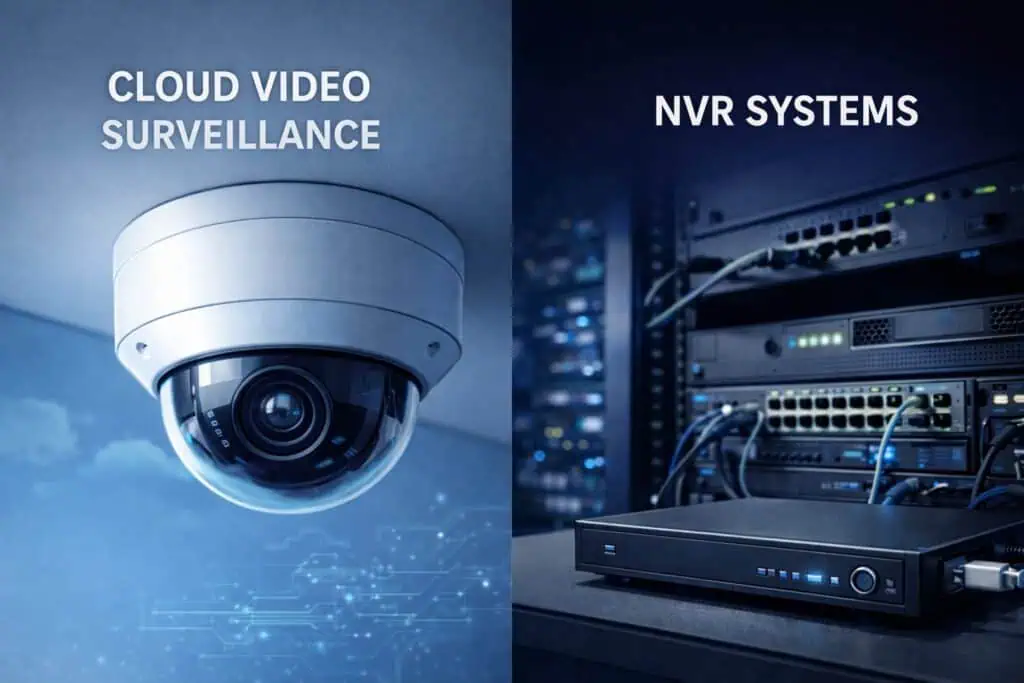
If you are evaluating a new security system in 2026, you have likely narrowed your options to either a cloud video surveillance platform or a traditional NVR system. While both solutions record and store video footage, the way they are built, maintained, and scaled is very different.
An NVR, or Network Video Recorder, stores footage locally on physical hardware installed at your site. Cloud video surveillance systems transmit encrypted footage to secure off site infrastructure where it is stored, managed, and accessed remotely. These architectural differences impact everything from cybersecurity to scalability to long term cost.
Understanding these differences is critical for security directors, IT leaders, and operations teams who want to invest in a system that will support their organization for years to come.
Infrastructure and Deployment
Traditional NVR systems rely on on site hardware. Cameras are connected to a recorder that stores video on internal hard drives. This setup requires physical space, consistent power, cooling considerations, and routine maintenance. Hard drives have a limited lifespan and must eventually be replaced. Firmware updates and system patches are often manual and require coordination between security and IT teams.
If the recorder is damaged, stolen, or destroyed, video evidence can be permanently lost because it is stored locally.
Cloud video surveillance systems eliminate the need for a bulky recorder on site. Video footage is encrypted and transmitted to secure cloud infrastructure. Software updates are handled automatically, and storage is redundant. Because the system is not dependent on a single physical device at the location, risk is reduced and management becomes simpler.
For organizations with multiple sites, such as construction companies, automotive dealerships, and higher education campuses, cloud deployment significantly reduces operational complexity.
Scalability and Growth
Scalability is one of the biggest limitations of traditional NVR systems. Each recorder supports a fixed number of camera channels. Once capacity is reached, additional hardware must be purchased and configured. Expanding coverage can mean replacing an entire recorder or installing a second unit, which increases cost and system complexity.
Cloud video surveillance platforms are built to scale through software. Adding cameras does not require replacing core infrastructure. As your organization grows, the system grows with it. This flexibility is especially important for expanding construction projects, large parking areas, seasonal operations, and multi location enterprises.
Instead of being constrained by hardware limitations, cloud systems allow security coverage to expand quickly and efficiently.
Cybersecurity and Risk
Cybersecurity is now a central concern in security system selection. NVR systems often require port forwarding, static IP configurations, or VPN access to enable remote viewing. If configured incorrectly, these setups can increase exposure to cyber threats. Because video is stored locally, physical theft or vandalism can also eliminate critical evidence.
Cloud video surveillance platforms are designed with modern cybersecurity practices in mind. Footage is encrypted during transmission and storage. Access controls are managed through role based permissions, and multi-factor authentication is commonly supported. Since video is stored off site in secure environments, it remains protected even if on site equipment is compromised.
For IT departments focused on minimizing risk and maintaining compliance, cloud architecture often aligns better with organizational security standards.
AI and Advanced Video Analytics
One of the most significant differences between cloud and NVR systems is the level of intelligence built into the platform.
Most legacy NVR systems rely on basic motion detection. These systems trigger alerts when pixels change within a designated area, which often results in frequent false alarms caused by weather, lighting shifts, or harmless activity. Advanced analytics may be available but typically require additional hardware or specialized add-ons.
Cloud video surveillance platforms increasingly integrate artificial intelligence directly into the system. AI powered analytics can distinguish between people, vehicles, and other objects. Behavioral detection, license plate recognition, and intelligent filtering help reduce false alarms and surface meaningful events.
Because these capabilities are software driven, they can improve over time through updates. Organizations benefit from innovation without replacing hardware. This allows security teams to shift from reactive review of footage to proactive detection and response.
Cost Considerations
At first glance, NVR systems may appear straightforward in terms of cost. However, they often require higher upfront investment in hardware, including recorders, storage drives, network equipment, and installation. Over time, maintenance costs and hardware refresh cycles add to the total cost of ownership. Recorders and hard drives typically need replacement every three to five years.
Cloud video surveillance systems typically require less on site infrastructure. Instead of a large capital expense, costs are structured as predictable operational expenses through subscription models. While there is an ongoing fee, many organizations find that total cost of ownership is competitive or lower when factoring in maintenance, upgrades, scalability, and reduced IT overhead.
When evaluating cost, it is important to consider not only initial investment but long term operational efficiency.
Disaster Recovery and Evidence Protection
Physical risk is another key consideration. If an NVR is damaged during a fire, severe weather event, or break in, recorded footage may be lost permanently. For high risk environments such as construction sites or remote facilities, this presents a significant vulnerability.
Cloud systems store footage in secure off site environments with built in redundancy. Even if cameras or on site equipment are destroyed, historical video remains accessible. This added layer of protection ensures that critical evidence is preserved when it is needed most.
Which Solution Is Better in 2026?
For small, single site deployments with minimal expansion plans and limited remote access needs, an NVR system may still meet basic requirements.
However, for organizations prioritizing scalability, cybersecurity, AI driven detection, remote access, and operational efficiency, cloud video surveillance is generally the more future ready option.
As threats evolve and security expectations increase, systems must do more than record video. They must provide intelligent insights, reliable access, and resilient storage.
Choosing between cloud video surveillance and an NVR system is not just a technical decision. It is a strategic investment in how your organization manages risk, protects assets, and supports growth.
Cloud video surveillance platforms offer greater flexibility, stronger cybersecurity protections, scalable infrastructure, and integrated AI capabilities that continue to improve over time.
When planning your next security upgrade, consider not only how footage will be stored today, but how your system will perform over the next five to ten years.